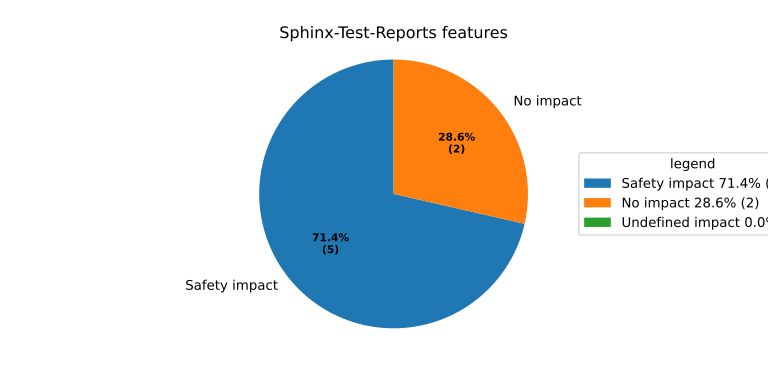
Features

🔍 Features

ID

Title

SI

Faults

FE_STR_AUTO_CASES

Auto-generate test case needs

yes

ER_STR_CASE_MISSING; ER_STR_CASE_ID_COLLISION; ER_STR_CASE_WRONG_DATA

FE_STR_AUTO_SUITES

Auto-generate test suite needs

yes

ER_STR_SUITE_MISSING; ER_STR_SUITE_ID_COLLISION

FE_STR_CUSTOM_TYPES

Configurable need types for imported results

yes

ER_STR_CUSTOM_TYPE_IGNORED; ER_STR_CUSTOM_TYPE_PREFIX_COLLISION

FE_STR_DISPLAY

Filter and display test results

no

ER_STR_DISPLAY_EMPTY

FE_STR_ENV_IMPORT

Import test environment information

no

ER_STR_ENV_MISSING

FE_STR_JUNIT_IMPORT

Import JUnit XML test results

yes

ER_STR_XML_PARSE; ER_STR_XML_SCHEMA; ER_STR_STATUS_WRONG; ER_STR_STATUS_MISSING

FE_STR_PROPERTY_LINKS

Map JUnit properties to Sphinx-Needs links

yes

ER_STR_PROP_LINK_MISSING; ER_STR_PROP_LINK_WRONG; ER_STR_PROP_TYPE_UNDECLARED

../../_images/need_pie_a48c2.svg
Feature: Import JUnit XML test results FE_STR_JUNIT_IMPORT
style: green_bar
si: yes
td: 3

Parse a JUnit-compatible XML file and make all contained test suites and test cases available as Sphinx-Needs objects via the test-file directive.

Fault: JUnit XML file cannot be parsed ER_STR_XML_PARSE
style: red_bar
parent needs: FE_STR_JUNIT_IMPORT

The XML file is malformed, incomplete, or contains encoding errors that prevent successful parsing.

Fault: JUnit XML file contains unexpected schema ER_STR_XML_SCHEMA
style: red_bar
parent needs: FE_STR_JUNIT_IMPORT

The XML structure deviates from the expected JUnit schema (e.g. missing testsuites root, unexpected attributes), causing data to be silently dropped or misread.

Fault: Test result status is incorrectly classified ER_STR_STATUS_WRONG
style: red_bar
parent needs: FE_STR_JUNIT_IMPORT

A test that failed, was skipped, or errored is imported with a wrong result value (e.g. passed instead of failed).

Fault: Test result status is not detected ER_STR_STATUS_MISSING
style: red_bar
parent needs: FE_STR_JUNIT_IMPORT

The result field on an imported test-case need is empty or absent even though the XML contained explicit pass/fail/skip/error information.

Feature: Auto-generate test suite needs FE_STR_AUTO_SUITES
style: green_bar
si: yes
td: 3

When auto_suites is set, each <testsuite> element in the XML generates a testsuite need automatically.

Fault: Test suite need is not created ER_STR_SUITE_MISSING
style: red_bar
parent needs: FE_STR_AUTO_SUITES

A <testsuite> element in the XML does not result in a testsuite need in the documentation.

Fault: Test suite ID collision ER_STR_SUITE_ID_COLLISION
style: red_bar
avoided by: RE_STR_ID_LENGTH
parent needs: FE_STR_AUTO_SUITES

Two test suites receive the same auto-generated ID, causing one to silently overwrite the other or a build error.

Feature: Auto-generate test case needs FE_STR_AUTO_CASES
style: green_bar
si: yes
td: 3

When auto_cases is set, each <testcase> element in the XML generates a testcase need automatically with a stable hash-based ID.

Fault: Test case need is not created ER_STR_CASE_MISSING
style: red_bar
parent needs: FE_STR_AUTO_CASES

A <testcase> element in the XML does not result in a need in the documentation.

Fault: Test case ID collision ER_STR_CASE_ID_COLLISION
style: red_bar
avoided by: RE_STR_ID_LENGTH
parent needs: FE_STR_AUTO_CASES

Two test cases receive the same auto-generated ID because tr_case_id_length is too small for the number of test cases.

Fault: Test case need contains wrong data ER_STR_CASE_WRONG_DATA
style: red_bar
parent needs: FE_STR_AUTO_CASES

Fields such as classname, file, time, or message on the imported test-case need differ from the values in the JUnit XML.

Feature: Configurable need types for imported results FE_STR_CUSTOM_TYPES
style: green_bar
si: yes
td: 3

The need type used for imported test cases and test suites can be overridden via tr_case / tr_suite configuration, e.g. to use a dedicated testresult type with a distinct ID prefix and styling.

Fault: Custom type is not applied to imported needs ER_STR_CUSTOM_TYPE_IGNORED
style: red_bar
parent needs: FE_STR_CUSTOM_TYPES

Imported test-case or test-suite needs use the default type even though tr_case or tr_suite was configured.

Fault: Custom type ID prefix collision with existing needs ER_STR_CUSTOM_TYPE_PREFIX_COLLISION
style: red_bar
avoided by: RE_STR_CUSTOM_TYPE
parent needs: FE_STR_CUSTOM_TYPES

The configured ID prefix for a custom type collides with IDs of pre-existing needs, causing duplicate-ID errors or silent overwrites.

Feature: Import test environment information FE_STR_ENV_IMPORT
style: green_bar
si: no
tools: TOOL_STR
child needs: ER_STR_ENV_MISSING

The test-env directive imports environment metadata produced by tox-envreport (Python version, packages, platform) as a Sphinx-Needs object for documentation purposes.

Fault: Environment need is not created ER_STR_ENV_MISSING
style: red_bar
parent needs: FE_STR_ENV_IMPORT

The test-env directive does not produce a need despite a valid environment report file being present.

Feature: Filter and display test results FE_STR_DISPLAY
style: green_bar
si: no
tools: TOOL_STR

The test-results and test-report directives create filtered tables and summaries of imported test results within the documentation.

Fault: Test results table is empty despite imported data ER_STR_DISPLAY_EMPTY
style: red_bar
parent needs: FE_STR_DISPLAY

The test-results directive renders an empty table even though matching testresult needs exist.